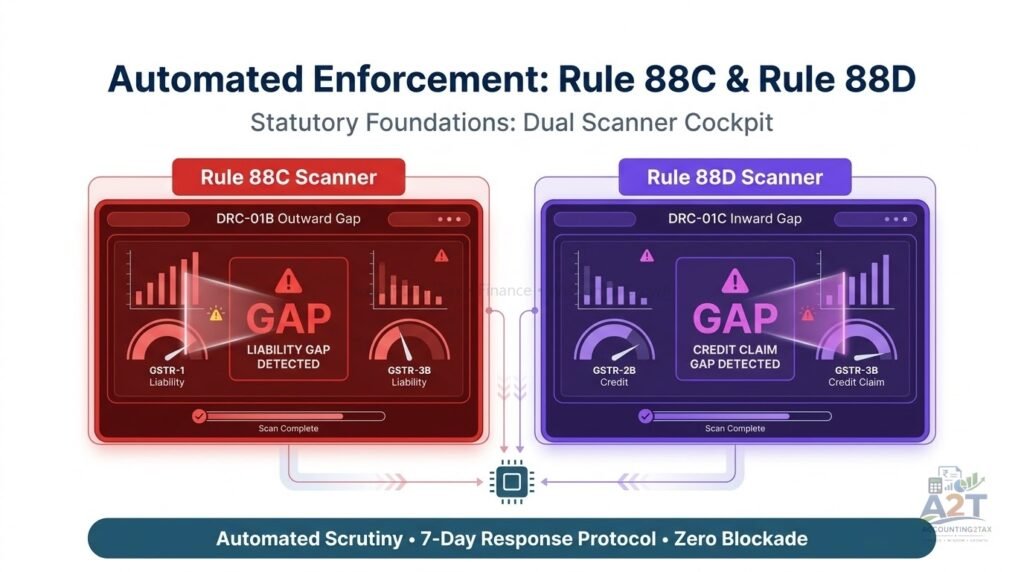
- • The Automated Enforcement Era: Rule 88C and Rule 88D
- • The Modern Control Framework: IMS and Reclaim Ledger
- • 1. The 6 Most Common and Costly Filing Mistakes
- • 2. The Financial Cost: Late Fees and Section 50 Interest
- • Master 6-Step Pre-Filing Quality Control SOP
Last Verified: 1 September 2026
Key verification sources: GST Council 56th Meeting (Sept 2025), CBIC Tax Information Portal, GSTN/GST Portal advisories.
In the early years of the Goods and Services Tax (GST), businesses could make filing mistakes and correct them months later during annual audits.
Today, the GST portal is powered by automated data-matching algorithms and real-time artificial intelligence. A single clerical typo or mismatch between your returns no longer goes unnoticed:
- If your GSTR-1 outward sales exceed your GSTR-3B tax payment, the portal automatically issues a Form DRC-01B notice under Rule 88C.
- If your claimed Input Tax Credit (ITC) exceeds your auto-generated GSTR-2B statement, the portal issues a Form DRC-01C notice under Rule 88D.
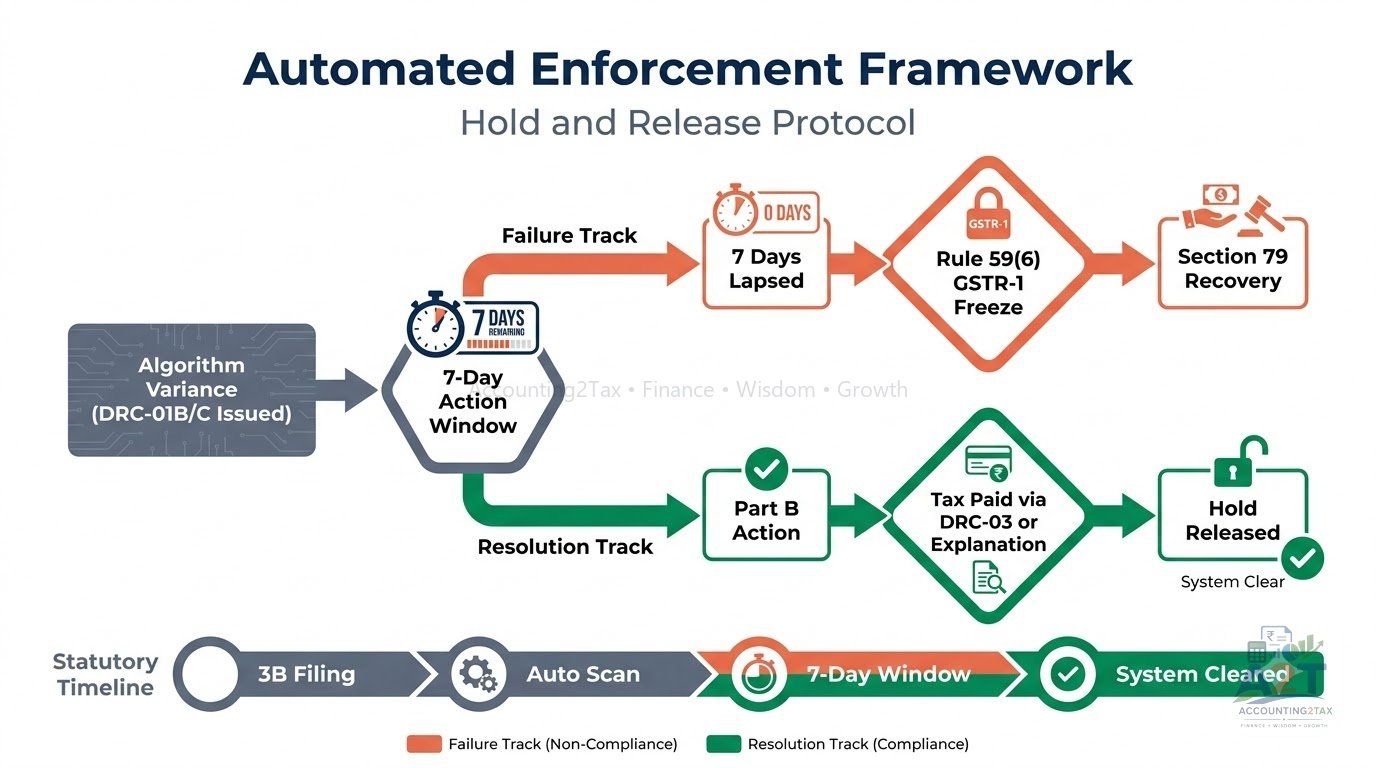
- If you fail to respond within 7 days, the system automatically blocks you from filing future returns or generating E-Way Bills.
What are the 6 most dangerous GST return filing mistakes that trigger automated notices and 18% penal interest? How does paying tax under the wrong head (CGST/SGST instead of IGST) complicate your cash ledger, and how does Form PMT-09 resolve it? What is the 180-day supplier payment rule that forces automatic ITC reversals? And what 6-Step Pre-Filing Checklist ensures zero-error compliance every month?
This comprehensive guide breaks down common filing pitfalls, details automated enforcement mechanisms, and provides an actionable quality control blueprint.
The Automated Enforcement Era: Rule 88C and Rule 88D
The GST Network operates an automated reconciliation engine that monitors every taxpayer:
THE AUTOMATED GST SCRUTINY ENGINE
                                      │
     ┌────────────────────────────────┴────────────────────────────────┐
▼ ▼
[ RULE 88C: FORM DRC-01B ]             [ RULE 88D: FORM DRC-01C ]
System compares Outward Tax in GSTR-1  System compares ITC claimed in GSTR-3B
against Tax actually PAID in GSTR-3B.  against Auto-Generated ITC in GSTR-2B.
                                      │
▼
[ THE 7-DAY STATUTORY DEADLINE ]
If a mismatch exists, you have exactly 7 DAYS to either:
1. Pay the tax difference with interest using Form DRC-03; OR
2. Submit an electronic explanation on the portal.
Failing to act BLOCKS your subsequent GSTR-1 and E-Way bill generation.
The Modern Control Framework: IMS and Reclaim Ledger
With the introduction of the Invoice Management System (IMS) (October 2024) and the Electronic Credit Reversal and Re-claimed Statement (Reclaim Ledger), taxpayers now have robust tools to manage ITC. The IMS allows buyers to Accept, Reject, or mark invoices as Pending before they flow into GSTR-2B. The Reclaim Ledger tracks temporary ITC reversals (like the 180-day rule) ensuring accurate reclaims without triggering automated notices.
1. The 6 Most Common and Costly Filing Mistakes
6 DANGEROUS FILING MISTAKES
                                         │
 ┌─────────────────────────────────────────────────────────────────────────────┐
 │  1. GSTR-1 VS GSTR-3B MISMATCH: Declaring higher sales in GSTR-1 than paid. │
 │  2. EXCESS ITC OVER GSTR-2B: Claiming provisional credits not uploaded.     │
 │  3. B2B ENTERED AS B2C: Depriving corporate clients of their legitimate ITC.│
 │  4. WRONG TAX HEAD PAYMENT: Paying CGST/SGST instead of IGST.               │
 │  5. CLAIMING BLOCKED CREDITS: Taking ITC on food, cars, or personal gifts.  │
 │  6. 180-DAY NON-PAYMENT RULE: Failing to reverse ITC on unpaid vendors.     │
 └─────────────────────────────────────────────────────────────────────────────┘
Mistake 1: Declaring More Sales in GSTR-1 Than Tax Paid in GSTR-3B
- What Happens: A business reports ₹15 Lakh taxable turnover in GSTR-1 (tax ₹2.7L) but reports only ₹10 Lakh in GSTR-3B (tax ₹1.8L) due to a typo or cash shortage.
- The Consequence: The system flags a ₹90,000 deficit and serves an automated DRC-01B notice. The shortfall must be deposited with 18% interest under Section 50.
Mistake 2: Claiming Input Tax Credit Beyond GSTR-2B
- What Happens: Under Section 16(2)(aa), you can only claim ITC that appears in your auto-populated GSTR-2B statement. If your vendor has not filed their GSTR-1, claiming provisional ITC is illegal.
- The Consequence: Triggers an automated DRC-01C notice under Rule 88D (applicable when the excess ITC claimed exceeds 20% AND ₹25 Lakhs), forcing you to reverse the credit with penal interest.
Mistake 3: Entering B2B Sales in B2C (Other) Tables
- What Happens: You make a sale to a registered corporate client. Your accountant enters the invoice in the B2C (Small/Other) table in GSTR-1 instead of Table 4A (B2B).
- The Consequence: The invoice never populates in your buyer’s GSTR-2B. Your client cannot claim ITC, holds back your payment, and disputes your billing.
Mistake 4: Paying Tax Under the Wrong Head (CGST/SGST vs. IGST)
- What Happens: An inter-state sale (attracting 18% IGST) is accidentally entered as an intra-state sale (9% CGST + 9% SGST).
- The Remedy: You cannot simply swap them on the return. However, under Form PMT-09, you can transfer cash ledger balances freely across major and minor heads without needing a refund application.
Mistake 5: Claiming Ineligible Blocked Credits under Section 17(5)
- What Happens: Claiming GST credit on employee canteen food, outdoor catering, passenger motor vehicles (seating $\le 13$), gym memberships, or festive client gifts.
- The Consequence: These are statutorily blocked under Section 17(5). Claiming them during audits leads to a 100% penalty for fraudulent credit utilization under Section 122.
Mistake 6: Ignoring the 180-Day Rule for Supplier Payments
- What Happens: Under the second proviso to Section 16(2), if you do not pay your supplier the full invoice value and GST within 180 days from the invoice date, you must reverse the claimed ITC. Crucially, interest at 18% under Section 50(3) is payable ONLY if you had originally availed and utilized that credit. If the ITC remained unutilized in your credit ledger, no interest is levied upon reversal.
- The Relief: You can reclaim this ITC once you finally make the payment to the vendor.
2. The Financial Cost: Late Fees and Section 50 Interest
STATUTORY FINANCIAL PENALTIES
                                       │
        ┌──────────────────────────────┴──────────────────────────────┐
▼ ▼
[ SECTION 50 PENAL INTEREST ]          [ STATUTORY LATE FEES ]
• Flat 18.0% PER ANNUM calculated daily• Regular Returns: ₹50 / day (₹25 CGST + ₹25 SGST)
  on the NET CASH TAX LIABILITY unpaid.• Nil Returns: ₹20 / day (₹10 CGST + ₹10 SGST)
• 18.0% interest for undue excess ITC  • Maximum cap per return: ₹500 to ₹10,000
  claims (if utilized).
Master 6-Step Pre-Filing Quality Control SOP
 ┌─────────────────────────────────────────────────────────────────────────────┐
 │  STEP 1: RECONCILE PURCHASE REGISTER WITH GSTR-2B                           │
 │  Download GSTR-2B on the 14th of the month. Match every vendor invoice.     │
 ├─────────────────────────────────────────────────────────────────────────────┤
 │  STEP 2: SEGREGATE INELIGIBLE CREDITS UNDER SECTION 17(5)                   │
 │  Manually exclude personal vehicle repairs, catering, and blocked items.    │
 ├─────────────────────────────────────────────────────────────────────────────┤
 │  STEP 3: CROSS-VERIFY GSTR-1 SALES REGISTER WITH E-WAY BILLS & IRN         │
 │  Ensure total taxable turnover in GSTR-1 matches your accounting books.     │
 ├─────────────────────────────────────────────────────────────────────────────┤
 │  STEP 4: ENSURE GSTR-1 OUTWARD TAX EXACTLY MATCHES GSTR-3B TABLE 3.1        │
 │  Prevent automated Rule 88C (DRC-01B) notices by aligning tax values.       │
 ├─────────────────────────────────────────────────────────────────────────────┤
 │  STEP 5: CHECK 180-DAY AGING REPORT FOR VENDOR PAYMENTS                     │
 │  Identify invoices older than 180 days and compute mandatory reversals.     │
 ├─────────────────────────────────────────────────────────────────────────────┤
 │  STEP 6: VERIFY CASH & CREDIT LEDGER OFFSETS BEFORE FINAL SUBMISSION        │
 │  Use electronic credit ledger first before utilizing electronic cash.       │
 └─────────────────────────────────────────────────────────────────────────────┘
Errors in GSTR-1 can now be corrected in the same month before GSTR-3B filing using the GSTR-1A facility. For subsequent periods, corrections must be made via amendment tables.
Calculate Your Exact GST Payouts and Interest Liability
Model your monthly outward tax, reconcile input tax credit balances, and project Section 50 interest on delayed payments using the Accounting2Tax Financial Tools.
Use the GST Calculator to verify your tax liability calculations.
Related Financial Wisdom
- GST Returns Explained: Filing Architecture — returns overview.
- GSTR-1 and GSTR-3B: Key Differences — monthly return roles.
- Late GST Return Filing: Late Fees and Interest — late filing consequences.
- Input Tax Credit Explained: How GST Purchases Work — ITC fundamentals.
- ITC Reconciliation: Matching Purchase Records with GSTR-2B — reconciliation guide.
Key Takeaways
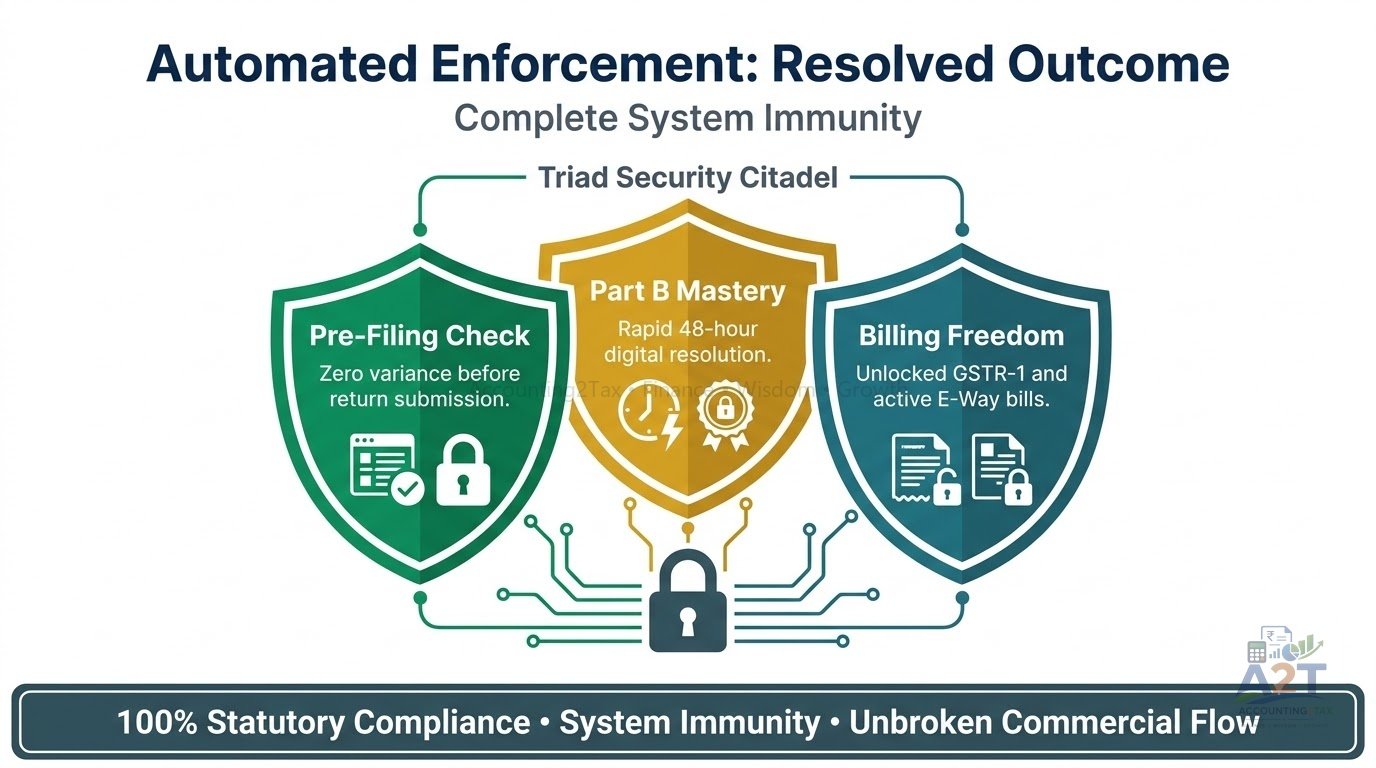
- Automated DRC-01B (Rule 88C) and DRC-01C (Rule 88D) notices require responses within 7 days to prevent return-filing blocks.
- Under Section 16(2)(aa), you can only claim Input Tax Credit that appears in your auto-populated GSTR-2B.
- Entering B2B sales in B2C tables prevents buyers from claiming ITC and damages client commercial relationships.
- Use Form PMT-09 to reallocate cash paid under the wrong tax heads (CGST/SGST vs IGST) without filing refund claims.
- If supplier payments exceed 180 days, you must reverse claimed ITC (with 18% penal interest if utilized).
- Follow a monthly 6-step pre-filing reconciliation SOP to eliminate penalties and notices.
Frequently Asked Questions (FAQs)
Q1. Do I pay interest if I reverse ITC that I never utilized?
Answer: No. Under Section 50(3) of the CGST Act, penal interest of 18% is levied only if the excess or ineligible ITC was both availed AND utilized.
Q2. What is the monetary threshold for a DRC-01C notice?
Answer: The automated DRC-01C notice for excess ITC is triggered when the ITC claimed in GSTR-3B exceeds the GSTR-2B auto-populated amount by more than 20% AND the absolute difference exceeds ₹25 Lakhs.
Q3. How does the Reclaim Ledger help with the 180-day rule?
Answer: The Electronic Credit Reversal and Re-claimed Statement allows you to track temporary ITC reversals due to non-payment to vendors. When you finally pay the vendor, you can safely reclaim the ITC matching the ledger balance.
📚 Sources & Official Regulatory References
| Topic / Statutory Regulation | Source | Authority | Checked On | Effective Date |
|---|---|---|---|---|
| Section 50 (Interest on Delayed Payment of Tax) & Section 122 (Penalties) | Central Goods and Services Tax Act, 2017 | Tier 1 | 2026-08-26 | Current |
| Rule 88C (DRC-01B Mismatch Procedure) & Rule 88D (DRC-01C ITC Mismatch) | Central Goods and Services Tax Rules, 2017 | Tier 1 | 2026-08-26 | Current |
| Section 16(2) Proviso (180-Day Supplier Payment Rule & ITC Reversal) | Central Goods and Services Tax Act, 2017 | Tier 1 | 2026-08-26 | Current |
| Guidelines on Form PMT-09 Electronic Cash Ledger Balance Reallocation | Goods and Services Tax Network (GSTN) | Tier 1 | 2026-08-26 | Current |
📚 Explore More in Returns (GST)
Taxonomy Series
Discover related guides, taxonomy series, and interactive financial calculators:
This publication is strictly for educational, research, and informational purposes and does not constitute formal financial, investment, tax, or legal advice.
- Data Accuracy & Inadvertent Errors: While every reasonable effort is made to maintain accuracy, all information, interest rates, tax thresholds, formulas, and statutory data are provided on an “as-is” basis. Accounting2Tax makes no express or implied warranties regarding absolute completeness, timeliness, or typographical and computational infallibility. Statutory authorities (Ministry of Finance, RBI, CBDT, CBIC, SEBI, PFRDA) update guidelines periodically. Readers must independently verify current rates and rules on official government portals before executing financial transactions.
- Illustrations, Simulations & Limitations of Liability: Mathematical models, compounding simulations, case studies, and hypothetical return projections are conceptual tools designed solely to demonstrate financial principles. They do not constitute guaranteed returns, profit forecasts, or capital safety commitments. Accounting2Tax and its authors disclaim all liability for any direct, indirect, or consequential financial losses, tax penalties, or investment outcomes arising from inadvertent errors, omissions, calculation discrepancies, or reliance placed on this material.
- Professional Consultation: Readers must independently evaluate their individual financial goals, tax positions, and risk tolerance, and consult a SEBI-registered financial advisor or certified chartered accountant before making financial decisions.
