
- • 1. Introduction: The Power of Uninterrupted Compounding
- • 2. The Mathematics of Compounding: Why Time Outweighs Capital
- • 3. The 15, 20, 25 & 30-Year Compounding Comparison Matrix
- • 4. The April 1–5 Deposit Strategy: Unlocking the Extra Month Alpha
- • 5. Engineering 5-Year Extensions: Form 4 Master Protocol
Master Wealth Creation Document (Updated for 2026).
An Authoritative Mathematical Exploration of Multi-Decade PPF Compounding, the April 1–5 Deposit Advantage, Form 4 Extension Engineering. Specifically, building a ₹1.54 Crore 100% Tax-Free Retirement Anchor..
1. Introduction: The Power of Uninterrupted Compounding
In addition, most investors view PPF merely as a basic tax-saving instrument under Section 80C. However, this narrow perspective misses its true capability. Furthermore, in reality, PPF acts as a powerful, tax-free wealth engine.
Consequently, disciplined investors maximize the ₹1,50,000 annual limit every year. Furthermore, they deposit funds early between April 1 and April 5. They also extend the account in 5-year blocks using Form 4. Consequently, PPF can generate over ₹1.54 Crore in 100% tax-free wealth.
┌────────────────────────────────────────────────────────────────────────────────────────┐
│                        THE 30-YEAR PPF WEALTH TRANSFORMATION                           │
├───────────────────────────────────────┬────────────────────────────────────────────────┤
│ Total Cumulative Principal Invested   │ ₹45,00,000 (₹45 Lakh over 30 Years)           │
├───────────────────────────────────────┼────────────────────────────────────────────────┤
│ Total Compounded Tax-Free Interest    │ **₹1,09,47,844 (₹1.09 Crore pure interest!)**  │
├───────────────────────────────────────┼────────────────────────────────────────────────┤
│ **FINAL MATURITY CORPUS AT 30 YEARS** │ **₹1,54,47,844 (₹1.54 Crore 100% Tax-Free)**   │
└───────────────────────────────────────┴────────────────────────────────────────────────┘
2. The Mathematics of Compounding: Why Time Outweighs Capital
As a result, compounding exhibits an exponential growth trajectory over long horizons. Moreover, in PPF, your journey passes through four distinct wealth phases:.
- Years 1 to 15: For instance, this represents the foundation phase. Therefore, your principal deposits make up over 55% of the total value.
- Years 16 to 20 (Extension 1): In comparison, you reach the tipping point. Similarly, the annual interest earned begins to exceed your fresh annual deposit.
- Years 21 to 25 (Extension 2): In contrast, growth accelerates rapidly. Overall, the interest earned in this single block exceeds your total 25-year deposits.
- Years 26 to 30 (Extension 3): Ultimately, you enter super-compounding. Thus, the account generates over ₹9.5 Lakh in tax-free interest every single year.
3. The 15, 20, 25 & 30-Year Compounding Comparison Matrix
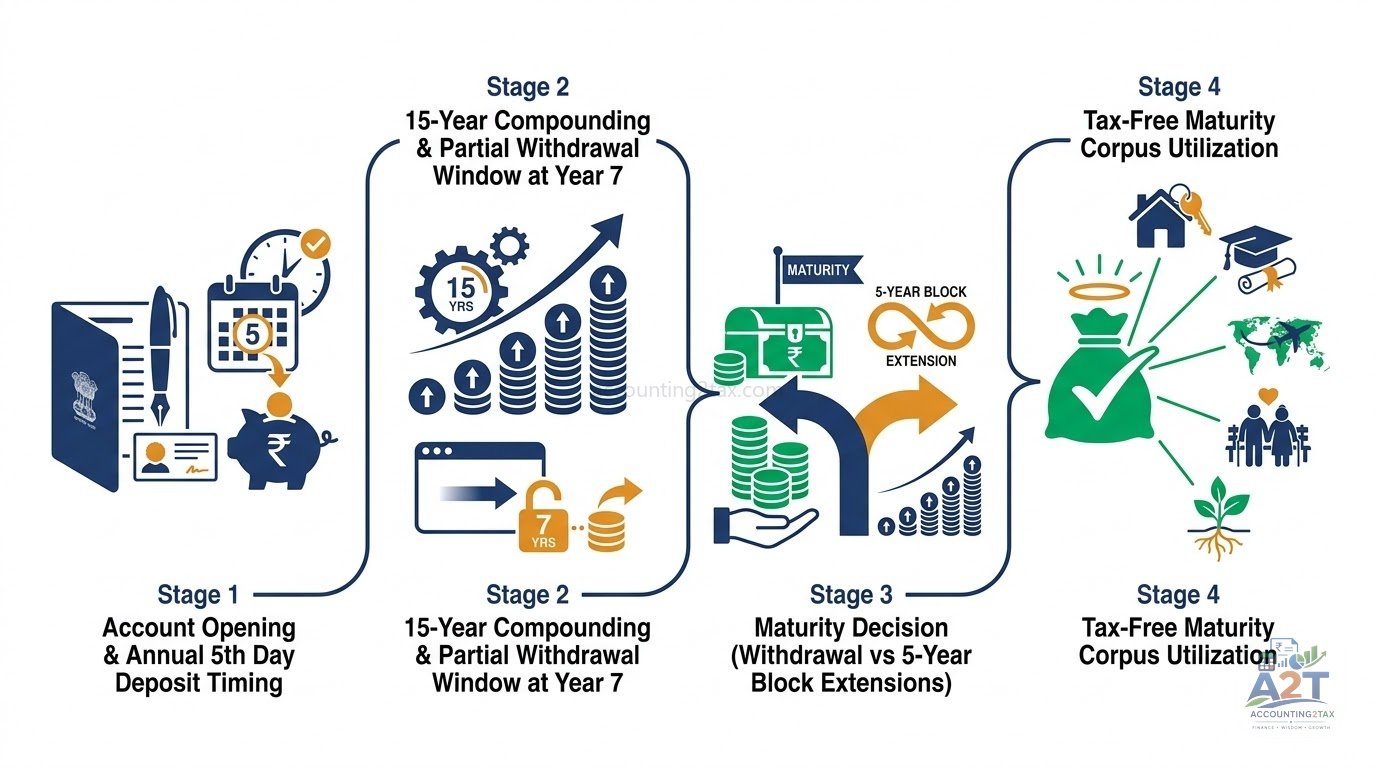
Assume an annual deposit of ₹1,50,000 invested before April 5 at the benchmark rate of 7.10% per annum:.
┌────────────────────────────────────────────────────────────────────────────────────────┐
│                    PPF WEALTH COMPOUNDING MILESTONES (ILLUSTRATIVE)                    │
├─────────────┬───────────────────┬───────────────────┬──────────────────┬───────────────┤
│ Milestone   │ Total Invested    │ Interest Earned   │ Total Corpus     │ % As Interest │
├─────────────┼───────────────────┼───────────────────┼──────────────────┼───────────────┤
│ **15 Years**│ ₹22,50,000 (₹22.5L│ ₹18,18,209 (₹18.2L│ **₹40,68,209**   │ 44.7%         │
├─────────────┼───────────────────┼───────────────────┼──────────────────┼───────────────┤
│ **20 Years**│ ₹30,00,000 (₹30.0L│ ₹36,58,288 (₹36.6L│ **₹66,58,288**   │ 54.9%         │
├─────────────┼───────────────────┼───────────────────┼──────────────────┼───────────────┤
│ **25 Years**│ ₹37,50,000 (₹37.5L│ ₹65,58,015 (₹65.6L│ **₹1,03,08,015** │ 63.6%         │
├─────────────┼───────────────────┼───────────────────┼──────────────────┼───────────────┤
│ **30 Years**│ ₹45,00,000 (₹45.0L│ ₹1,09,47,844 (₹1Cr│ **₹1,54,47,844** │ **70.9%**     │
└─────────────┴───────────────────┴───────────────────┴──────────────────┴───────────────┘
Therefore, long tenure transforms a modest savings routine into generational wealth.
4. The April 1–5 Deposit Strategy: Unlocking the Extra Month Alpha
Specifically, interest accrues on the lowest balance between the 5th and the month-end. Therefore, timing your contributions creates a massive long-term advantage:.
┌────────────────────────────────────────────────────────────────────────────────────────┐
│                  APRIL 1–5 STRATEGY VS. SPREAD / MARCH END DEPOSITS                    │
├───────────────────────────────────────┬──────────────────────────┬─────────────────────┤
│ Investment Cadence                    │ 25-Year Corpus           │ Lost Wealth (Drag)  │
├───────────────────────────────────────┼──────────────────────────┼─────────────────────┤
│ **₹1.5L Deposited Every April 1–5**   │ **₹1,03,08,015**         │ **₹0 (Optimal)**    │
├───────────────────────────────────────┼──────────────────────────┼─────────────────────┤
│ ₹12,500 Monthly SIP (1st of month)    │ ₹97,42,118               │ -₹5,65,897          │
├───────────────────────────────────────┼──────────────────────────┼─────────────────────┤
│ ₹1.5L Deposited in March End          │ ₹96,24,664               │ **-₹6,83,351**      │
└───────────────────────────────────────┴──────────────────────────┴─────────────────────┘
Specifically, depositing in early April yields nearly ₹6.8 Lakh in extra tax-free wealth over 25 years.
5. Engineering 5-Year Extensions: Form 4 Master Protocol
In addition, extending your account beyond 15 years requires following statutory procedures:.
┌────────────────────────────────────────────────────────────────────────────────────────┐
│                              FORM 4 EXTENSION CHECKLIST                                │
├──────────────────────────────────┬─────────────────────────────────────────────────────┤
│ **Filing Deadline**              │ Submit **Form 4 within 1 year** of maturity.        │
├──────────────────────────────────┼─────────────────────────────────────────────────────┤
│ **Extension Block**              │ 5 Financial Years per extension block.              │
├──────────────────────────────────┼─────────────────────────────────────────────────────┤
│ **Frequency of Extensions**      │ **Unlimited** (Extend 2, 3, or 4 times to age 60/70)│
├──────────────────────────────────┼─────────────────────────────────────────────────────┤
│ **Withdrawal Flexibility**       │ Withdraw up to **60% of opening balance** per block.│
└──────────────────────────────────┴─────────────────────────────────────────────────────┘
However, you must submit Form 4 within one year of maturity. Furthermore, if you miss this deadline, fresh deposits earn zero interest.
6. PPF as the Sovereign Debt Anchor in a Retirement Portfolio
Consequently, a balanced retirement plan combines wealth accumulators with safe debt anchors. Equity mutual funds drive growth, while PPF secures your capital:.
As a result, oPTIMAL RETIREMENT ASSET ALLOCATION.
                               ┌───────────────────────────────────────┐
                               │       TOTAL LONG-TERM PORTFOLIO       │
                               └───────────────────┬───────────────────┘
                                                   │
                     ┌─────────────────────────────┴─────────────────────────────┐
                     │                                                           │
        ┌────────────▼────────────┐                                 ┌────────────▼────────────┐
        │   EQUITY GROWTH ENGINE  │                                 │   PPF SOVEREIGN ANCHOR  │
        │   (60% - 70% Allocation)│                                 │   (30% - 40% Allocation)│
        │   • Flexi-Cap MFs       │                                 │   • Zero Default Risk   │
        │   • Large & Mid Cap     │                                 │   • 100% Tax-Free (EEE) │
        │   • NPS Class E Equity  │                                 │   • Inflation Cushion   │
        └─────────────────────────┘                                 └─────────────────────────┘
Consequently, this hybrid structure provides both growth and stability.
7. Tactical Post-15 Year Drawdown Strategies for Retirees

After 15 years, your PPF account transforms into a flexible income source:.
- The 60% Block Drawdown: Moreover, in an account extended with deposits. Specifically, you can withdraw up to 60% across the 5-year block tax-free.
- Annual Tax-Free Pension: For instance, in an account extended without deposits, you can execute one annual withdrawal of any amount.
8. Common Mistakes That Destroy Compounding
- Closing the Account at Year 15: Liquidating early stops compounding right before its most lucrative phase.
- Irregular Contributions: Therefore, depositing late in March sacrifices significant compounding interest.
- Missing the Form 4 Deadline: In comparison, forgetting to file Form 4 turns active compounding into a non-earning deposit.
9. Frequently Asked Questions (FAQs)
Q1. Can I extend PPF for 30 years without adding fresh money?
Yes. Similarly, you can leave the accumulated corpus untouched. In contrast, it will continue earning full tax-free interest indefinitely.
Q2. How does PPF compare with Debt Mutual Funds?
Overall, debt mutual fund gains face taxation at your marginal slab rate. In contrast, PPF delivers a clean 7.10% tax-free yield.
Q3. Can I open a PPF account for my spouse?
Yes. Ultimately, your spouse can hold an independent account and invest up to ₹1.5 Lakh annually.
📚 Sources & Official Regulatory References
- Thus, ministry of Finance (Department of Economic Affairs) — dea.gov.in.
- national Savings Institute (NSI) — nsiindia.gov.in.
- income Tax Department of India — incometax.gov.in.
📚 Explore More in Government Schemes (Saving & Investment)
Taxonomy Series
Discover related guides, taxonomy series, and interactive financial calculators:
This publication is strictly for educational, research, and informational purposes and does not constitute formal financial, investment, tax, or legal advice.
- Data Accuracy & Inadvertent Errors: While every reasonable effort is made to maintain accuracy, all information, interest rates, tax thresholds, formulas, and statutory data are provided on an “as-is” basis. Accounting2Tax makes no express or implied warranties regarding absolute completeness, timeliness, or typographical and computational infallibility. Statutory authorities (Ministry of Finance, RBI, CBDT, CBIC, SEBI, PFRDA) update guidelines periodically. Readers must independently verify current rates and rules on official government portals before executing financial transactions.
- Illustrations, Simulations & Limitations of Liability: Mathematical models, compounding simulations, case studies, and hypothetical return projections are conceptual tools designed solely to demonstrate financial principles. They do not constitute guaranteed returns, profit forecasts, or capital safety commitments. Accounting2Tax and its authors disclaim all liability for any direct, indirect, or consequential financial losses, tax penalties, or investment outcomes arising from inadvertent errors, omissions, calculation discrepancies, or reliance placed on this material.
- Professional Consultation: Readers must independently evaluate their individual financial goals, tax positions, and risk tolerance, and consult a SEBI-registered financial advisor or certified chartered accountant before making financial decisions.