
- • 1. Introduction: The Classic Indian Safe-Savings Dilemma
- • 2. Head-to-Head Comparison: PPF vs. Bank Fixed Deposits
- • 3. The Decisive Tax Differential: Nominal vs. Real Post-Tax Yields
- • 4. Compounding Wealth Simulation: ₹1.5 Lakh Annual Investment over 15 Years
- • 5. Sovereign Safety vs. DICGC Bank Insurance
specifically, > Master Comparative Reference (2026 Edition).
In addition, in addition, consequently, > An Objective Analytical Evaluation of Public Provident Fund (PPF) vs. commercial Bank Fixed Deposits (FDs) Across Post-Tax Returns, Liquidity Windows, Safety Guarantees, and Strategic Asset Allocation..
1. Introduction: The Classic Indian Safe-Savings Dilemma
Furthermore, furthermore, in addition, consequently, when Indian earners look for guaranteed. Specifically, risk-free avenues to deploy their savings. Specifically, the two most prominent choices are the Public Provident Fund (PPF) and Commercial Bank Fixed Deposits (FDs).
furthermore, as a result, both instruments offer capital safety and predictable interest returns. in contrast, in addition, however, they serve fundamentally different financial objectives:.
* Bank Fixed Deposits: for instance, prioritize short-to-medium-term liquidity, flexible tenures, and regular cash flows.
* Public Provident Fund: therefore, prioritizes multi-decade, 100% tax-free compounding. In addition, serving as an unshakeable long-term retirement debt anchor.
moreover, furthermore, understanding how taxation, compounding frequency. similarly, lock-in periods impact your net take-home returns is essential to choosing the right tool for each financial goal.
2. Head-to-Head Comparison: PPF vs. Bank Fixed Deposits
┌────────────────────────────────────────────────────────────────────────────────────────┐
│                              PPF VS. BANK FD MASTER COMPARISON                         │
├───────────────────────────────┬──────────────────────────┬─────────────────────────────┤
│ Feature                       │ Public Provident Fund    │ Bank Fixed Deposit (FD)     │
├───────────────────────────────┼──────────────────────────┼─────────────────────────────┤
│ **Safety / Guarantee**        │ Direct Union Sovereign   │ DICGC Insured up to ₹5 Lakh │
├───────────────────────────────┼──────────────────────────┼─────────────────────────────┤
│ **Current Nominal Rate**      │ **7.10% per annum**      │ **6.50% to 7.50% p.a.**     │
├───────────────────────────────┼──────────────────────────┼─────────────────────────────┤
│ **Compounding Frequency**     │ Annual Compounding       │ Quarterly Compounding       │
├───────────────────────────────┼──────────────────────────┼─────────────────────────────┤
│ **Tenure / Lock-in**          │ 15 Years (Extendable)    │ 7 Days to 10 Years          │
├───────────────────────────────┼──────────────────────────┼─────────────────────────────┤
│ **Annual Deposit Ceiling**    │ ₹500 Min | **₹1.5L Max** │ ₹1,000 Min | **No Upper Cap│
├───────────────────────────────┼──────────────────────────┼─────────────────────────────┤
│ **Tax on Investment**         │ Deductible (Sec 80C)     │ Only 5-Yr Tax Saver FDs     │
├───────────────────────────────┼──────────────────────────┼─────────────────────────────┤
│ **Tax on Accrued Interest**   │ **100% Tax-Free (EEE)**  │ **Taxed Annually at Slab +  │
│                               │                          │  TDS under Section 194A**   │
├───────────────────────────────┼──────────────────────────┼─────────────────────────────┤
│ **Liquidity / Access**        │ Loans Y3-Y6; Partials Y7 │ High (Premature with pen.)  │
├───────────────────────────────┼──────────────────────────┼─────────────────────────────┤
│ **Court Attachment**          │ **Immune (Sec 15)**      │ Can be attached in decrees  │
└───────────────────────────────┴──────────────────────────┴─────────────────────────────┘
3. The Decisive Tax Differential: Nominal vs. Real Post-Tax Yields
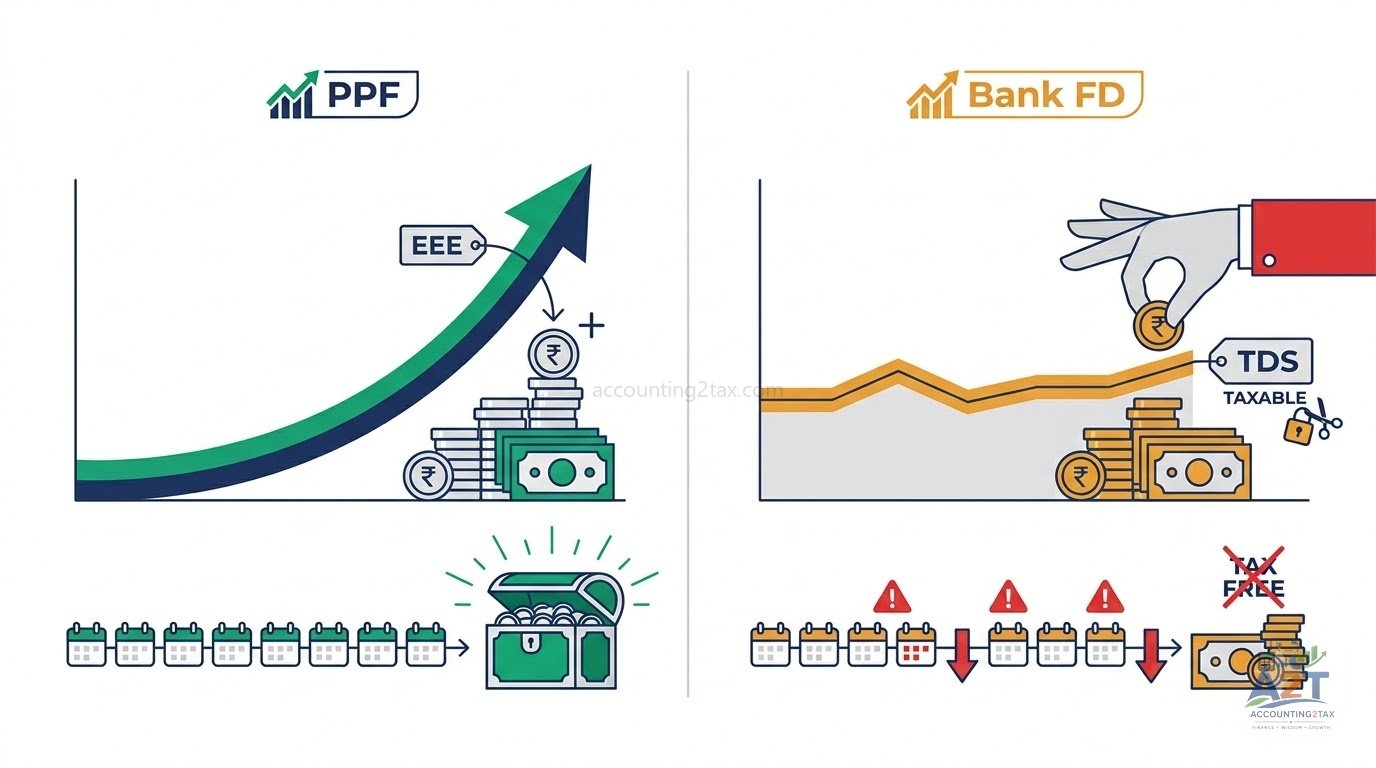
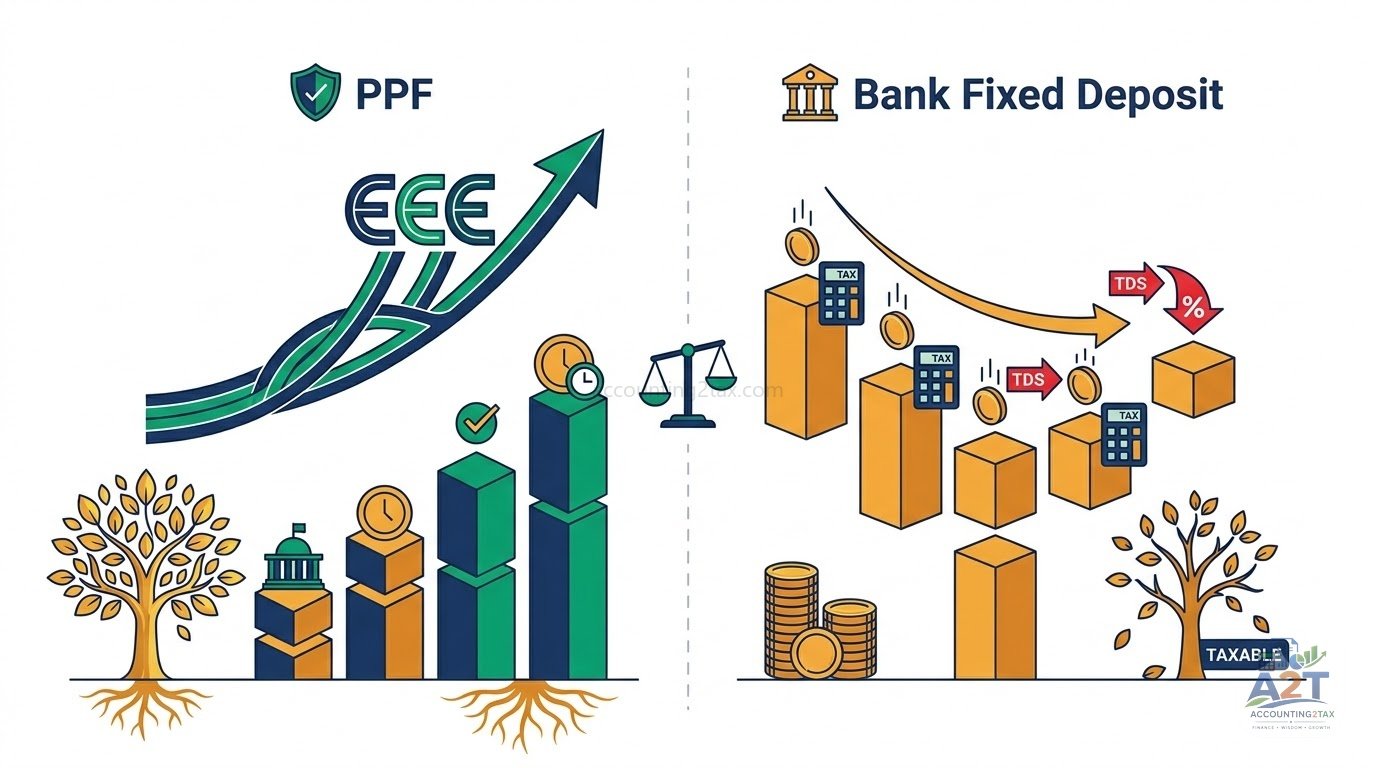
Similarly, similarly, in comparison, in contrast, the single most significant differentiator between PPF and Bank FDs is the tax treatment of interest:.
* PPF Interest (7.10%): In contrast, in contrast, overall, enjoys Exempt-Exempt-Exempt (EEE) status. Overall, overall, ultimately, for instance, you keep 100% of the interest earned.
* Bank FD Interest (7.50%): Ultimately, ultimately, thus. Furthermore, added to your total taxable income and taxed at your marginal tax slab every financial year.
Real Post-Tax Return Comparison Across Tax Slabs:
┌────────────────────────────────────────────────────────────────────────────────────────┐
│                     POST-TAX RETURN REALITY CHECK (7.50% FD VS 7.10% PPF)              │
├───────────────────────────────┬──────────────────────────┬─────────────────────────────┤
│ Investor's Income Tax Slab    │ Effective Post-Tax FD    │ Effective Post-Tax PPF      │
├───────────────────────────────┼──────────────────────────┼─────────────────────────────┤
│ **0% Tax Slab (Nil)**         │ 7.50%                    │ **7.10%**                   │
├───────────────────────────────┼──────────────────────────┼─────────────────────────────┤
│ **10% Tax Bracket**           │ 6.75%                    │ **7.10% (+0.35% Alpha)**    │
├───────────────────────────────┼──────────────────────────┼─────────────────────────────┤
│ **20% Tax Bracket**           │ 6.00%                    │ **7.10% (+1.10% Alpha)**    │
├───────────────────────────────┼──────────────────────────┼─────────────────────────────┤
│ **30% Tax Bracket (+ Cess)**  │ **5.16%**                │ **7.10% (+1.94% Alpha!)**   │
└───────────────────────────────┴──────────────────────────┴─────────────────────────────┘
Thus, thus, For anyone in the 20% or 30% tax bracket. PPF delivers a significantly higher net return than a 7.5% Bank FD, generating nearly 2% higher post-tax alpha every year..
4. Compounding Wealth Simulation: ₹1.5 Lakh Annual Investment over 15 Years
to see the practical impact of the tax drag, consider investing ₹1,50,000 annually over 15 years:.
┌────────────────────────────────────────────────────────────────────────────────────────┐
│                        15-YEAR WEALTH ACCUMULATION PROJECTION                          │
├───────────────────────────────────────┬────────────────────────────────────────────────┤
│ **Public Provident Fund (7.10% EEE)** │ **₹40,68,209 (₹40.68 Lakh 100% Tax-Free)**     │
├───────────────────────────────────────┼────────────────────────────────────────────────┤
│ 7.5% Bank FD (30% Tax Slab @ 5.16%)   │ ₹33,26,450 (₹33.26 Lakh Net Post-Tax)          │
├───────────────────────────────────────┼────────────────────────────────────────────────┤
│ **PPF Net Wealth Advantage**          │ **+₹7,41,759 (₹7.42 Lakh Extra Wealth in PPF!)**│
└───────────────────────────────────────┴────────────────────────────────────────────────┘
5. Sovereign Safety vs. DICGC Bank Insurance
- PPF Safety: In addition, in addition, as a result, backed by the statutory guarantee of the Government of India. Furthermore, furthermore, in addition, similarly, there is zero risk of principal default.
- Bank FD Safety: furthermore, protected under the Deposit Insurance and Credit Guarantee Corporation (DICGC) up to a maximum limit of ₹5,00,000 (₹5 Lakh) per depositor per bank (including principal and interest). in contrast, in comparison. In addition, depositing more than ₹5 Lakh in a single bank carries commercial counterparty risk in the rare event of bank insolvency.
6. Strategic Asset Allocation: The Hybrid Strategy
Rather than viewing PPF and Fixed Deposits as mutually exclusive, smart financial planning uses them in tandem:.
for instance, sMART DUAL-DEBT ASSET ALLOCATION.
                               ┌───────────────────────────────────┐
                               │        TOTAL DEBT ALLOCATION      │
                               └─────────────────┬─────────────────┘
                                                 │
                     ┌───────────────────────────┴───────────────────────────┐
                     │                                                       │
        ┌────────────▼────────────┐                             ┌────────────▼────────────┐
        │  SHORT/MEDIUM TERM (FDs)│                             │  LONG TERM WEALTH (PPF) │
        │  (20% - 30% Debt Pool)  │                             │  (70% - 80% Debt Pool)  │
        │  • Emergency Reserve    │                             │  • Retirement Core      │
        │  • 1 to 3 Year Goals    │                             │  • Multi-Decade EEE     │
        │  • Instant Liquidity    │                             │  • Zero Tax Drag        │
        └─────────────────────────┘                             └─────────────────────────┘
- Use Bank FDs For:.
– Emergency Funds: moreover, 6 to 12 months of living expenses kept in liquid sweep-in FDs for instant access.
– Short-Term Goals (1–3 Years): similarly, saving for a vacation, car down payment, or scheduled insurance premiums. - Use PPF For:.
– Retirement Core Anchor: Similarly, similarly, overall, safe long-term accumulation protected against market volatility.
– Children’s Higher Education: In contrast, in contrast, ultimately, 15- to 20-year compounding horizon with zero tax deductions.
7. The Strategic Decision Matrix
┌────────────────────────────────────────────────────────────────────────────────────────┐
│                              THE STRATEGIC DECISION MATRIX                             │
├───────────────────────────────────┬────────────────────────────────────────────────────┤
│ IF YOUR PRIMARY OBJECTIVE IS...   │ CHOOSE THIS INSTRUMENT...                          │
├───────────────────────────────────┼────────────────────────────────────────────────────┤
│ Liquidity within 1 to 5 years     │ **Bank Fixed Deposits (FDs)**                      │
├───────────────────────────────────┼────────────────────────────────────────────────────┤
│ Maximum Post-Tax Return (30% Slab)│ **Public Provident Fund (PPF)** (7.10% EEE)        │
├───────────────────────────────────┼────────────────────────────────────────────────────┤
│ Depositing more than ₹1.5L/year   │ **Bank Fixed Deposits** (No annual ceiling)        │
├───────────────────────────────────┼────────────────────────────────────────────────────┤
│ Protection from Court Attachment  │ **Public Provident Fund (PPF)** (Section 15)       │
├───────────────────────────────────┼────────────────────────────────────────────────────┤
│ Regular Monthly / Quarterly Income│ **Bank Fixed Deposits (Non-Cumulative Payout)**    │
└───────────────────────────────────┴────────────────────────────────────────────────────┘
8. Frequently Asked Questions (FAQs)
Q1. Is 5-Year Tax Saver Bank FD better than PPF under Section 80C?
PPF is superior. While both offer Section 80C deductions on investment. Consequently, the interest on a 5-Year Tax Saver FD is fully taxable every year. Overall, overall, pPF interest and maturity proceeds are 100% tax-free.
Q2. Can I break my Bank FD before maturity?
Ultimately, ultimately, specifically, Yes. Bank FDs subscribers can close prematurely at any time. As a result, subject to a nominal penalty (usually 0.5% to 1.0% interest reduction). Thus, thus, consequently, overall, pPF accounts are strictly locked for 15 years with conditional partial withdrawals from Year 7.
Q3. Which is better for senior citizens: PPF or Senior Citizen FDs?
as a result, ultimately, for seniors above 60 seeking regular quarterly cash flows. Senior Citizen FDs (or SCSS at 8.2%) are preferred for income. In addition, in addition, in addition, thus, for wealth preservation passed to heirs, PPF offers tax-free compounding.
📚 Sources & Official Regulatory References
- Furthermore, furthermore, furthermore, Ministry of Finance (Department of Economic Affairs) — Small Savings Scheme Interest Rate Notifications..
Official Portal: https://dea.gov.in. - for instance, Reserve Bank of India (RBI) — Master Directions on Interest Rates on Rupee Deposits & DICGC Insurance Coverage..
Official Portal: https://www.rbi.org.in. - moreover, Income Tax Department, Government of India — Provisions of Sections 80C, 10(11). 194A of the Income Tax Act, 1961..
Official Portal: https://www.incometax.gov.in.
📚 Explore More in Government Schemes (Saving & Investment)
Taxonomy Series
Discover related guides, taxonomy series, and interactive financial calculators:
This publication is strictly for educational, research, and informational purposes and does not constitute formal financial, investment, tax, or legal advice.
- Data Accuracy & Inadvertent Errors: While every reasonable effort is made to maintain accuracy, all information, interest rates, tax thresholds, formulas, and statutory data are provided on an “as-is” basis. Accounting2Tax makes no express or implied warranties regarding absolute completeness, timeliness, or typographical and computational infallibility. Statutory authorities (Ministry of Finance, RBI, CBDT, CBIC, SEBI, PFRDA) update guidelines periodically. Readers must independently verify current rates and rules on official government portals before executing financial transactions.
- Illustrations, Simulations & Limitations of Liability: Mathematical models, compounding simulations, case studies, and hypothetical return projections are conceptual tools designed solely to demonstrate financial principles. They do not constitute guaranteed returns, profit forecasts, or capital safety commitments. Accounting2Tax and its authors disclaim all liability for any direct, indirect, or consequential financial losses, tax penalties, or investment outcomes arising from inadvertent errors, omissions, calculation discrepancies, or reliance placed on this material.
- Professional Consultation: Readers must independently evaluate their individual financial goals, tax positions, and risk tolerance, and consult a SEBI-registered financial advisor or certified chartered accountant before making financial decisions.