
- • 1. Introduction: The Need for a Modern Retirement Framework
- • 2. Why NPS Was Introduced: The Paradigm Shift in Retirement
- • 3. How NPS Works: The Operational Lifecycle
- • 4. Institutional Architecture: Regulators, CRAs, and Trustees
- • 5. Account Structures: Tier I vs. Tier II
Master Reference Document (Updated with Latest PFRDA Directives).
An Authoritative Exploration of National Pension System (NPS) Architecture, Investment Asset Classes. Specifically, pension Fund Selection, Tier I vs. Tier II Structures, Section 80CCD Tax Parity. Specifically, the Landmark 80:20 Exit Framework..
1. Introduction: The Need for a Modern Retirement Framework
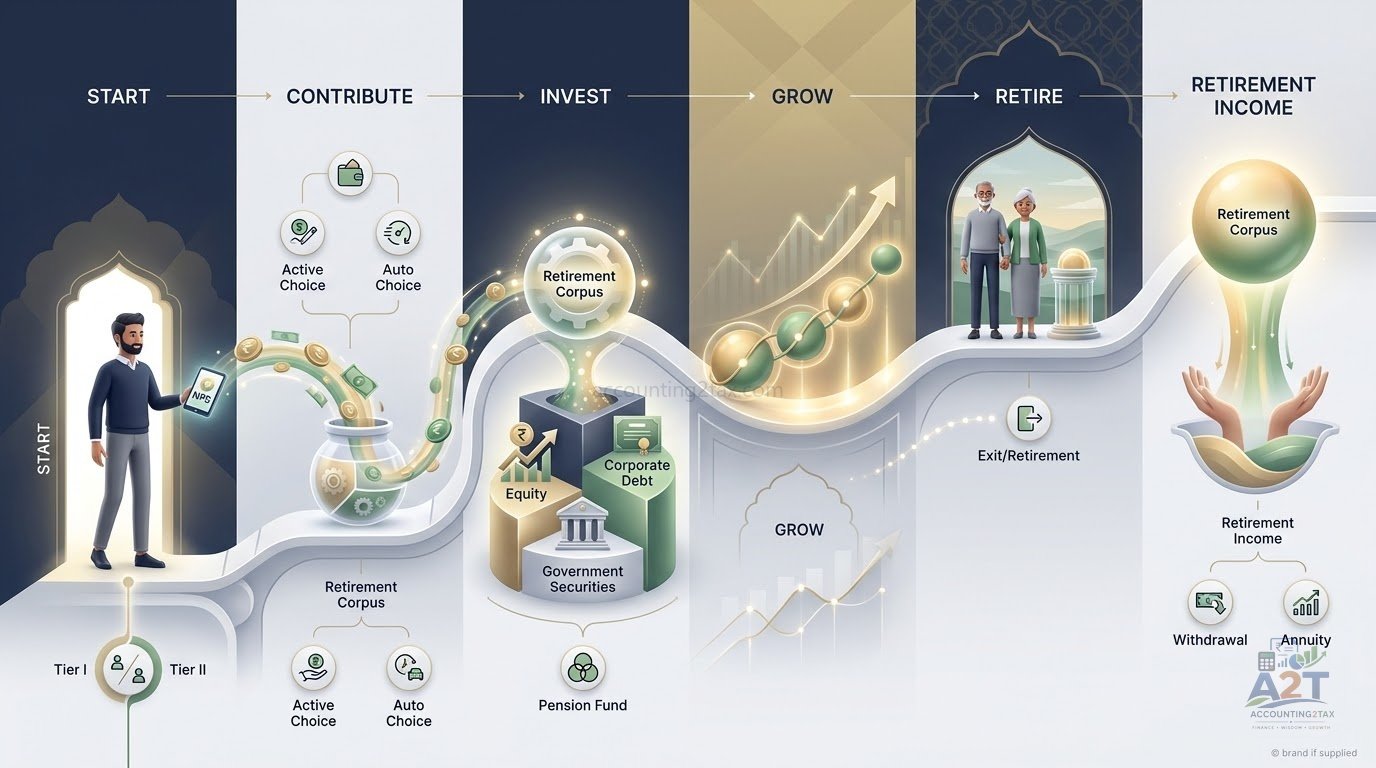
In addition, india has experienced substantial economic transformation and rising life expectancy. However, changing family structures have created an urgent need for self-funded retirement planning.
Furthermore, historically, traditional defined-benefit pensions supported only government personnel. Consequently, in response, the Government of India introduced the National Pension System (NPS). As a result, today, NPS serves as India’s primary voluntary, defined-contribution retirement vehicle.
Specifically, NPS combines low institutional fund management costs with disciplined multi-asset investing. Furthermore, attractive tax incentives support long-term compounding. Therefore, NPS provides an essential foundation for long-term retirement security.
┌────────────────────────────────────────────────────────────────────────────────────────┐
│                        NPS AT A GLANCE (2026 REGULATORY SNAPSHOT)                      │
├───────────────────────────────┬────────────────────────────────────────────────────────┤
│ **Regulator & Oversight**     │ PFRDA (Statutory Authority) & NPS Trust (Fiduciary)    │
├───────────────────────────────┼────────────────────────────────────────────────────────┤
│ **Eligibility**               │ Any Indian Citizen (Resident/NRI/OCI), Ages 18 to 70   │
├───────────────────────────────┼────────────────────────────────────────────────────────┤
│ **Maximum Investment Age**    │ Continue contributing and compounding up to **Age 85** │
├───────────────────────────────┼────────────────────────────────────────────────────────┤
│ **Asset Classes**             │ Equity (E), Corporate Debt (C), Gilts (G), Alternate(A)│
├───────────────────────────────┼────────────────────────────────────────────────────────┤
│ **Expense Ratio (TER)**       │ Ultra-low institutional cost (**0.03% to 0.09% p.a.**) │
├───────────────────────────────┼────────────────────────────────────────────────────────┤
│ **Exit Framework (Maturity)** │ **Up to 80% Lump sum / SUR** + **20% Annuity** (>₹12L) │
├───────────────────────────────┼────────────────────────────────────────────────────────┤
│ **Small Corpus Exemption**    │ **100% Full Lump Sum** allowed if corpus ≤ **₹8 Lakh** │
├───────────────────────────────┼────────────────────────────────────────────────────────┤
│ **Tax Status**                │ Section 80CCD(1), 80CCD(1B), and **80CCD(2) in Both**  │
└───────────────────────────────┴────────────────────────────────────────────────────────┘
2. Why NPS Was Introduced: The Paradigm Shift in Retirement
Specifically, in 2004, the Central Government replaced defined-benefit pensions with defined-contribution systems for new civil servants. Subsequently, in May 2009, the government opened NPS to all Indian citizens.
Consequently, this policy shift addressed rising demographic longevity. In addition, it gave citizens direct ownership of their retirement savings.
Unlike traditional fixed deposits, NPS allocates funds across dynamic capital markets. Consequently, subscribers build purchasing power that beats inflation over multiple decades.
3. How NPS Works: The Operational Lifecycle
Moreover, the operational lifecycle of an NPS account spans four distinct stages:.
For instance, pHASE 1: ONBOARDING PHASE 2: ACCUMULATION PHASE 3: LIFESTYLE REBALANCING PHASE 4: EXIT & DRAWDOWN.
┌───────────────────────┐      ┌───────────────────────┐      ┌───────────────────────┐       ┌────────────────────────┐
│ • CRA Registration   │      │ • Monthly / Annual    │      │ • Auto Choice Glide   │       │ • Up to 80% Lump Sum / │
│ • PRAN Generation     │ ───▶ │   Contributions       │ ───▶ │   Path Rebalancing    │  ───▶ │   SUR (60% Tax-Free)   │
│ • POP / eNPS Online   │      │ • Pension Fund Choice │      │ • Active Reallocation │       │ • 20% Annuity Lifelong │
│ • Account Activation  │      │ • Asset Allocation    │      │   (Tax-Free Switches) │       │   Monthly Pension      │
└───────────────────────┘      └───────────────────────┘      └───────────────────────┘       └────────────────────────┘
4. Institutional Architecture: Regulators, CRAs, and Trustees
Furthermore, NPS features a robust, multi-layered institutional architecture:.
- PFRDA: Therefore, the statutory regulatory body that governs and supervises the pension sector.
- NPS Trust: In comparison, the legal owner of all assets, holding investments on behalf of subscribers.
- Central Recordkeeping Agencies (CRAs): Similarly, protean, KFintech, and CAMS handle administration and accounting.
- Pension Fund Managers (PFMs): In contrast, professional institutional asset managers deploy subscriber funds.
- Points of Presence (POPs): Overall, authorized banks and financial intermediaries facilitate customer onboarding.
- Annuity Service Providers (ASPs): Ultimately, iRDAI-regulated life insurers disburse regular monthly pensions.
5. Account Structures: Tier I vs. Tier II
In addition, every NPS subscriber receives a unique 12-digit Permanent Retirement Account Number (PRAN) with two account tiers:.
┌────────────────────────────────────────────────────────────────────────────────────────┐
│                                 TIER I VS. TIER II COMPARISON                          │
├───────────────────────────────┬──────────────────────────┬─────────────────────────────┤
│ Parameter                     │ Tier I (Core Retirement) │ Tier II (Voluntary Savings) │
├───────────────────────────────┼──────────────────────────┼─────────────────────────────┤
│ **Account Purpose**           │ Mandatory Pension Corpus │ Flexible Investment Facility│
├───────────────────────────────┼──────────────────────────┼─────────────────────────────┤
│ **Minimum Annual Deposit**    │ ₹1,000 per financial year│ ₹250 per transaction        │
├───────────────────────────────┼──────────────────────────┼─────────────────────────────┤
│ **Withdrawal Flexibility**    │ Restricted until age 60  │ **100% Anytime Liquidity**  │
├───────────────────────────────┼──────────────────────────┼─────────────────────────────┤
│ **Tax Deductions**            │ Sec 80CCD(1), 1B, and (2)│ No general tax deduction    │
├───────────────────────────────┼──────────────────────────┼─────────────────────────────┤
│ **Exit Tax Treatment**        │ 60% Tax-Free (Sec 10(12A)│ Taxed at marginal slab rates│
└───────────────────────────────┴──────────────────────────┴─────────────────────────────┘
6. Asset Classes: Equities, Corporate Debt, and Gilts
Specifically, subscribers can allocate their money across four distinct asset classes:.
- Asset Class E (Equity): Thus, invests up to 75% in top listed equities to drive long-term capital growth.
- Asset Class C (Corporate Debt): Specifically, invests in high-grade corporate bonds and infrastructure debt.
- Asset Class G (Government Securities): In addition, invests in sovereign Central and State Government bonds.
- Asset Class A (Alternative Assets): Furthermore, invests up to 5% in commercial REITs, InvITs, and AIFs.
7. Investment Choices: Active Choice vs. Auto Choice
Overall, subscribers manage their portfolios using two distinct investment options:.
Active Choice (Individual Asset Allocation)
In particular, subscribers set their own asset weightings across Classes E, C, G, and A. However, equity exposure has a ceiling of 75% up to age 50, reducing gradually to 50% by age 60.
Auto Choice (Lifecycle Fund Glide Paths)
In contrast, the system automatically adjusts your asset allocation based on your age:.
* Aggressive Lifecycle (LC-75): Consequently, starts with 75% equity, reducing exposure annually from age 35.
* Moderate Lifecycle (LC-50): As a result, starts with 50% equity, providing a balanced risk-return profile.
* Conservative Lifecycle (LC-25): Moreover, caps equity at 25%, prioritizing capital preservation.
8. Registered Pension Fund Managers
Furthermore, subscribers can select and switch between 10 registered Pension Fund Managers:.
1. For instance, sBI Pension Funds Pvt. Ltd.
2. Therefore, lIC Pension Fund Ltd.
3. In comparison, uTI Retirement Solutions Ltd.
4. Similarly, hDFC Pension Management Co. Ltd.
5. In contrast, iCICI Prudential Pension Funds Management Co. Ltd.
6. Overall, kotak Mahindra Pension Fund Ltd.
7. Ultimately, aditya Birla Sun Life Pension Management Ltd.
8. Thus, tata Pension Management Ltd.
9. Specifically, max Life Pension Fund Management Ltd.
10. In addition, axis Pension Fund Management Ltd.
In addition, subscribers can change their pension fund manager once per financial year completely tax-free.
9. Comprehensive Tax Framework: Old vs. New Tax Regimes
Furthermore, nPS offers three exclusive tax advantages under the Income Tax Act:.
┌────────────────────────────────────────────────────────────────────────────────────────┐
│                              NPS TAX INCENTIVE ARCHITECTURE                            │
├───────────────────────────────┬──────────────────────────┬─────────────────────────────┤
│ Income Tax Section            │ Old Tax Regime           │ New Tax Regime (Sec 115BAC) │
├───────────────────────────────┼──────────────────────────┼─────────────────────────────┤
│ **Section 80CCD(1)**          │ Deductible up to ₹1.50 L │ Disallowed                  │
├───────────────────────────────┼──────────────────────────┼─────────────────────────────┤
│ **Section 80CCD(1B)**         │ Deductible up to ₹50,000 │ Disallowed                  │
├───────────────────────────────┼──────────────────────────┼─────────────────────────────┤
│ **Section 80CCD(2) Corporate**│ **Deductible (10%/14%)** │ **DEDUCTIBLE (10%/14%)**    │
├───────────────────────────────┼──────────────────────────┼─────────────────────────────┤
│ **60% Lump Sum at Exit**      │ **100% Tax-Free**        │ **100% Tax-Free**           │
├───────────────────────────────┼──────────────────────────┼─────────────────────────────┤
│ **Annuity Monthly Pension**   │ Taxed at slab rates      │ Taxed at slab rates         │
└───────────────────────────────┴──────────────────────────┴─────────────────────────────┘
Therefore, employer contributions under Section 80CCD(2) remain valuable under both tax regimes.
10. Exit & Withdrawal Framework: The Modernized 80:20 Rule
Specifically, under the latest PFRDA Exit and Withdrawal Amendment Regulations, retirement rules provide increased flexibility:.
Consequently, nPS MATURITY FRAMEWORK (CORPUS > ₹12 LAKH).
                               ┌──────────────────────────────────────────────┐
                               │           TOTAL ACCUMULATED CORPUS           │
                               └──────────────────────┬───────────────────────┘
                                                      │
                       ┌──────────────────────────────┴──────────────────────────────┐
                       │                                                             │
        ┌──────────────▼──────────────┐                               ┌──────────────▼──────────────┐
        │   UP TO 80% LUMP SUM / SUR  │                               │    MINIMUM 20% ANNUITY      │
        │ • 60% Tax-Free (Sec 10(12A))│                               │ • Lifelong monthly pension  │
        │ • 20% Lump Sum / SUR        │                               │ • Purchase is 100% tax-free │
        │ • SUR phased drawdown to 85 │                               │ • Return of Capital to heirs│
        └─────────────────────────────┘                               └─────────────────────────────┘
- The 80:20 Exit Rule: As a result. In addition, non-government subscribers with a corpus exceeding ₹12 Lakh can withdraw up to 80% as a lump sum or SUR. Moreover, the mandatory annuity requirement is reduced to just 20%.
- Small Corpus Exemption: For instance, if your corpus is ₹8,00,000 or less. Furthermore, you can withdraw 100% as a lump sum with zero annuity.
- Mid-Range Corpus (₹8L to ₹12L): Therefore, you can withdraw up to ₹6 Lakh as a lump sum, drawing down the remaining balance through SUR over at least 6 years.
- Extended Age Horizon: In comparison, subscribers can continue contributing and compounding up to age 85.

11. Frequently Asked Questions (FAQs)
Q1. Can I withdraw 100% of my NPS corpus at age 60?
Similarly, yes, if your total accumulated corpus is ₹8,00,000 or less. However, if your corpus exceeds ₹12 Lakh, you can withdraw up to 80% as a lump sum or SUR. In contrast, 20% allocated to an annuity.
Q2. Is employer contribution under Section 80CCD(2) available in the New Tax Regime?
Yes. Overall, section 80CCD(2) deductions remain fully available under the New Tax Regime (Section 115BAC) up to 10% of salary for private employees and 14% for government employees.
Q3. What is Systematic Unit Redemption (SUR)?
For instance, SUR allows subscribers to withdraw their 80% lump sum corpus periodically across monthly, quarterly, or annual installments up to age 85. Ultimately, the remaining balance to compound.
📚 Sources & Official Regulatory References
- Thus, pension Fund Regulatory and Development Authority (PFRDA) — pfrda.org.in.
- national Pension System Trust (NPS Trust) — npstrust.org.in.
- income Tax Department, Government of India — incometax.gov.in.
📚 Explore More in Retirement (Saving & Investment)
Taxonomy Series
Discover related guides, taxonomy series, and interactive financial calculators:
This publication is strictly for educational, research, and informational purposes and does not constitute formal financial, investment, tax, or legal advice.
- Data Accuracy & Inadvertent Errors: While every reasonable effort is made to maintain accuracy, all information, interest rates, tax thresholds, formulas, and statutory data are provided on an “as-is” basis. Accounting2Tax makes no express or implied warranties regarding absolute completeness, timeliness, or typographical and computational infallibility. Statutory authorities (Ministry of Finance, RBI, CBDT, CBIC, SEBI, PFRDA) update guidelines periodically. Readers must independently verify current rates and rules on official government portals before executing financial transactions.
- Illustrations, Simulations & Limitations of Liability: Mathematical models, compounding simulations, case studies, and hypothetical return projections are conceptual tools designed solely to demonstrate financial principles. They do not constitute guaranteed returns, profit forecasts, or capital safety commitments. Accounting2Tax and its authors disclaim all liability for any direct, indirect, or consequential financial losses, tax penalties, or investment outcomes arising from inadvertent errors, omissions, calculation discrepancies, or reliance placed on this material.
- Professional Consultation: Readers must independently evaluate their individual financial goals, tax positions, and risk tolerance, and consult a SEBI-registered financial advisor or certified chartered accountant before making financial decisions.