
- • 1. Introduction: What is the Public Provident Fund (PPF)?
- • 2. Why PPF Exists: The Sovereign Social Security Pillar
- • 3. How PPF Works: The Operational Lifecycle
- • 4. Eligibility: Who Can Open a PPF Account?
- • 5. Master Rules: Contribution Limits & The “5th of the Month” Rule
Master Reference Document (Updated with Latest Ministry of Finance Guidelines).
An Authoritative Exploration of Public Provident Fund (PPF) Architecture, Sovereign Guarantee. Specifically, the 5th-of-the-Month Compounding Rule, Loan and Partial Withdrawal Windows, Form 4 Extension Protocols, and EEE Tax Exemptions..
1. Introduction: What is the Public Provident Fund (PPF)?
In addition, the Public Provident Fund is a statutory small savings scheme. Furthermore, the Government of India introduced this scheme under the Public Provident Fund Act. Consequently, today, the Government Savings Promotion Act unifies all small savings schemes.
As a result, this scheme mobilizes personal savings across the country. In addition, it provides an unshakeable retirement nest egg for all citizens. Moreover, self-employed professionals and salaried individuals can both invest safely.
Unlike mutual funds or stocks, PPF carries zero market volatility. Furthermore, the Central Government of India guarantees both the principal and interest. Therefore, your capital enjoys complete sovereign security at all times.
┌────────────────────────────────────────────────────────────────────────────────────────┐
│                               PPF AT A GLANCE (2026 SNAPSHOT)                          │
├───────────────────────────────┬────────────────────────────────────────────────────────┤
│ **Current Interest Rate**     │ **7.10% per annum** (Compounded Annually)              │
├───────────────────────────────┼────────────────────────────────────────────────────────┤
│ **Sovereign Guarantee**       │ Direct Union Government of India Backing               │
├───────────────────────────────┼────────────────────────────────────────────────────────┤
│ **Tax Status**                │ **Exempt-Exempt-Exempt (EEE)** — 100% Tax-Free         │
├───────────────────────────────┼────────────────────────────────────────────────────────┤
│ **Deposit Limits**            │ Min ₹500 | Max **₹1,50,000** per Financial Year        │
├───────────────────────────────┼────────────────────────────────────────────────────────┤
│ **Tenure & Lock-in**          │ 15 Financial Years (Extendable in 5-Year Blocks)       │
├───────────────────────────────┼────────────────────────────────────────────────────────┤
│ **Court Attachment Protection**│ Immune from court attachment under civil decrees      │
└───────────────────────────────┴────────────────────────────────────────────────────────┘
2. Why PPF Exists: The Sovereign Social Security Pillar
For instance, salaried corporate employees build long-term wealth through the Employee Provident Fund. However, self-employed individuals historically lacked access to a structured retirement fund.
Consequently, the government created PPF to offer equal retirement security to all earners. Therefore, today, PPF functions as a universal wealth-preservation pillar.
In comparison, investors rely on PPF for three key advantages:.
* Absolute Capital Safety: Similarly, the scheme carries zero credit risk and zero default risk.
* Predictable Compounding: In contrast, the government notifies competitive quarterly interest rates.
* Complete Tax Exemption: Overall, the account enjoys total immunity from income tax and capital gains.
3. How PPF Works: The Operational Lifecycle

Ultimately, the operation of a PPF account spans four distinct stages over 15 years:.
Thus, pHASE 1: ONBOARDING PHASE 2: ACCUMULATION PHASE 3: LOAN & WITHDRAWALS PHASE 4: MATURITY / EXTENSION.
┌───────────────────────┐     ┌───────────────────────┐     ┌───────────────────────┐     ┌────────────────────────┐
│ • Account Opening at  │     │ • Annual Deposits     │     │ • Loan: Y3 to Y6      │     │ • Full Tax-Free Payout │
│   Post Office / Bank  │ ──▶ │   (₹500 to ₹1.5 Lakh) │ ──▶ │ • Partial: From Y7    │ ──▶ │ • Form 4 Ext (with dep)│
│ • Nominee Registration│     │ • Deposit by 5th      │     │ • Premature: From Y5  │     │ • Ext without deposits │
│ • Online Banking Setup│     │ • Annual Compounding  │     │   (Specific grounds)  │     │   (Earns interest)     │
└───────────────────────┘     └───────────────────────┘     └───────────────────────┘     └────────────────────────┘
4. Eligibility: Who Can Open a PPF Account?
Specifically, any resident Indian adult can open a PPF account. Specifically, individuals above 18 years can operate one account in their own name.
In addition, parents can open an account for a minor child. Either the mother or father can act as the natural guardian. However, both parents cannot open separate accounts for the same child.
In addition, non-Resident Indians cannot open new PPF accounts. If a resident becomes an NRI later, they may retain the account until 15-year maturity. However, NRIs cannot extend the account after maturity.
Furthermore, current rules prohibit Hindu Undivided Families and joint accounts. Furthermore, every PPF account must belong to a single individual.
5. Master Rules: Contribution Limits & The “5th of the Month” Rule
Consequently, subscribers must deposit at least ₹500 every financial year. In contrast, the maximum annual ceiling is ₹1,50,000 across all accounts. As a result, this limit includes deposits in minor accounts where you act as guardian.
Moreover, investors can deposit funds in lump sums or flexible installments. However, deposit timing plays a critical role in maximizing returns.
┌────────────────────────────────────────────────────────────────────────────────────────┐
│                       THE 5TH OF THE MONTH DEPOSIT TIMING ADVANTAGE                    │
├────────────────────────────────┬───────────────────────────────────────────────────────┤
│ Deposited on or before 5th     │ Earns full interest for that calendar month.          │
├────────────────────────────────┼───────────────────────────────────────────────────────┤
│ Deposited on or after 6th      │ Zero interest earned for that month; starts next month│
├────────────────────────────────┼───────────────────────────────────────────────────────┤
│ **Best Practice Strategy**     │ **Deposit ₹1.5 Lakh between April 1 and April 5**     │
│                                │  to earn a full 12 months of compounded interest!     │
└────────────────────────────────┴───────────────────────────────────────────────────────┘
For instance, interest accrues on the lowest balance between the 5th and the month-end. Therefore, always deposit your funds before the 5th of each month.
6. Interest Calculation Mechanics
Therefore, the Ministry of Finance reviews PPF interest rates every quarter. In comparison, officials benchmark these rates against government bond yields.
Although interest accrues monthly, the bank credits it annually on March 31. As a result, your interest compounds into the principal every financial year.
7. Liquidity Mechanisms: Loan Facility Against PPF
Similarly, subscribers can access short-term liquidity without breaking their account. In contrast, the scheme offers a dedicated loan facility during early years:.
┌────────────────────────────────────────────────────────────────────────────────────────┐
│                                 PPF LOAN FACILITY RULES                                │
├───────────────────────────────┬────────────────────────────────────────────────────────┤
│ **Eligibility Window**        │ Available from the **3rd year to the 6th year**.       │
├───────────────────────────────┼────────────────────────────────────────────────────────┤
│ **Maximum Loan Amount**       │ Up to **25% of balance** at the end of 2nd prior year. │
├───────────────────────────────┼────────────────────────────────────────────────────────┤
│ **Interest Rate on Loan**     │ Just **1.0% per annum above prevailing PPF rate**.     │
├───────────────────────────────┼────────────────────────────────────────────────────────┤
│ **Repayment Period**          │ Repayable within **36 months** in easy installments.   │
└───────────────────────────────┴────────────────────────────────────────────────────────┘
Therefore, subscribers can resolve short-term cash crunches easily.
8. Partial Withdrawal Rules (From Year 7 Onwards)
Overall, from the 7th financial year onward, subscribers can make partial withdrawals. Specifically, you can execute one partial withdrawal per financial year.
Ultimately, the withdrawal amount cannot exceed 50% of the past balance. Furthermore, all partial withdrawals remain 100% tax-free under Section 10(11).
9. Premature Account Closure Rules
Subscribers can close their account prematurely after 5 full financial years. However, the government permits early closure only under specific conditions:.
- Medical Treatment: Thus, serious illnesses affecting the subscriber, spouse, children, or parents.
- Higher Education: Specifically, higher education expenses for the subscriber or dependent children.
- Residency Change: In addition, the account holder acquires Non-Resident Indian status.
Furthermore, in such cases, the bank applies a 1.0% interest penalty on past returns.
10. Maturity & The 5-Year Extension Pathways (Form 4)
A PPF account matures after 15 full financial years. Consequently, at maturity, subscribers have three flexible pathways:.
As a result, pPF MATURITY OPTIONS (AT 15 YEARS).
                               ┌─────────────────────────────────────┐
                               │         15-YEAR MATURE ACCOUNT      │
                               └──────────────────┬──────────────────┘
                                                  │
          ┌───────────────────────────────────────┼───────────────────────────────────────┐
          │                                       │                                       │
┌─────────▼─────────┐                   ┌─────────▼─────────┐                   ┌─────────▼─────────┐
│   FULL CLOSURE    │                   │ EXTENSION WITH    │                   │ EXTENSION WITHOUT │
│   & WITHDRAWAL    │                   │ CONTRIBUTIONS     │                   │ CONTRIBUTIONS     │
│ • 100% Tax-Free   │                   │ • Submit Form 4   │                   │ • Default option  │
│ • Complete corpus │                   │   within 1 year   │                   │ • No forms needed │
│   credited to bank│                   │ • Keep depositing │                   │ • Earns 7.1% tax- │
│   account directly│                   │ • Can withdraw 60%│                   │   free interest   │
└───────────────────┘                   └───────────────────┘                   └───────────────────┘
- Option 1: Complete Closure: Moreover, withdraw the entire corpus tax-free into your bank account.
- Option 2: Extension with Deposits: For instance, submit Form 4 within one year. Therefore, you can continue contributing and withdraw up to 60% per block.
- Option 3: Extension without Deposits: In comparison, the account automatically extends. Similarly, the entire corpus continues earning tax-free interest.
11. Complete EEE Taxation Framework
In contrast, pPF enjoys the highest tax privilege in India known as Exempt-Exempt-Exempt (EEE):.
- Contribution Stage: Overall, deposits up to ₹1.50 Lakh qualify for deduction under Section 80C.
- Accumulation Stage: Ultimately, annual interest remains fully exempt under Section 10(11).
- Maturity Stage: Thus, the entire maturity payout is 100% tax-free.
12. Legal Immunity: Protection from Court Attachment
Specifically, under Section 15 of the Government Savings Banks Act, courts cannot attach your PPF balance. In addition, creditors cannot seize these funds for debts or commercial liabilities. Consequently, PPF offers supreme asset protection for professionals and entrepreneurs.
13. Practical Compounding Simulation: 15 to 30 Years
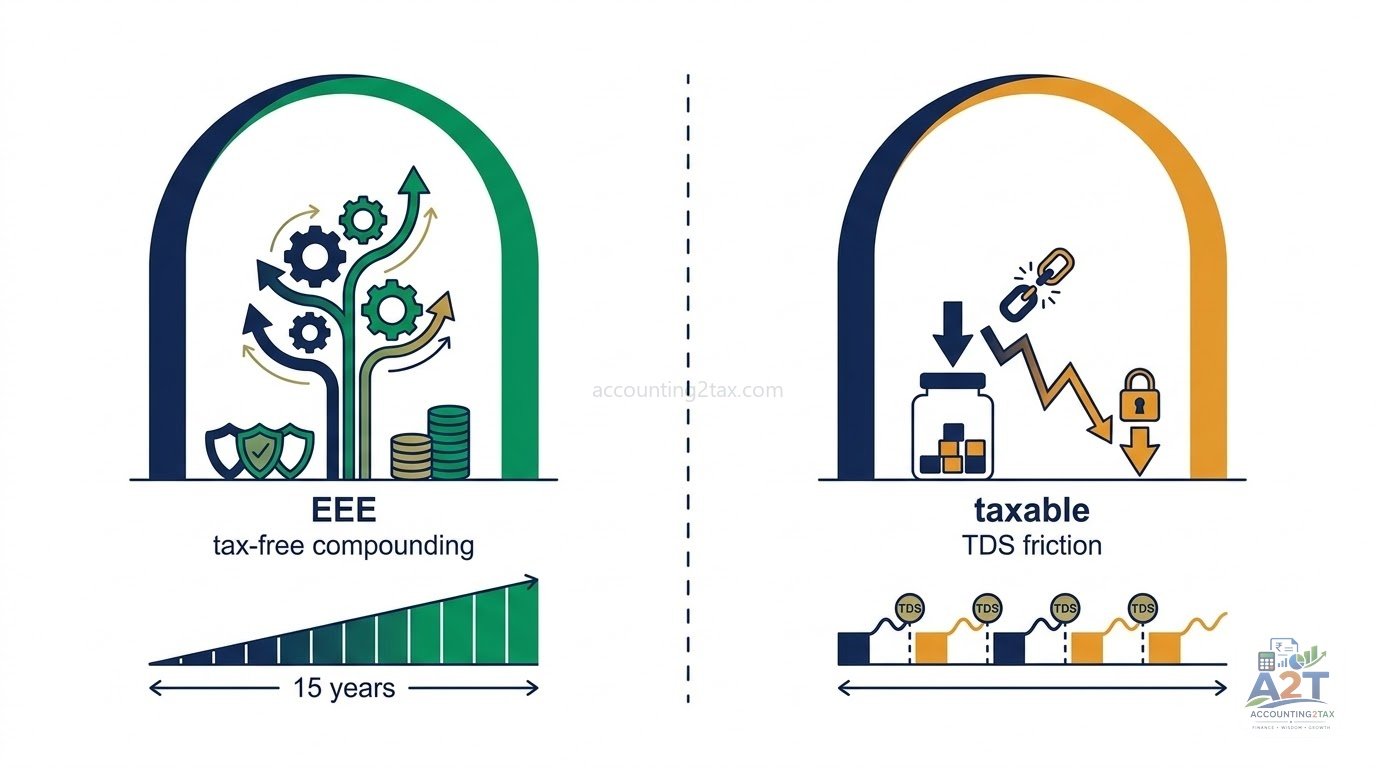
Furthermore, to see compounding in action, consider depositing ₹1,50,000 every April 1–5 at 7.10% interest:.
┌────────────────────────────────────────────────────────────────────────────────────────┐
│                        PPF MULTI-DECADE COMPOUNDING SIMULATION                         │
├──────────────┬────────────────────────┬───────────────────────┬────────────────────────┤
│ Horizon      │ Cumulative Deposit     │ Compounded Interest   │ Total Tax-Free Corpus  │
├──────────────┼────────────────────────┼───────────────────────┼────────────────────────┤
│ **15 Years** │ ₹22,50,000 (₹22.5L)    │ ₹18,18,209 (₹18.18L)  │ **₹40,68,209 (₹40.7L)**│
├──────────────┼────────────────────────┼───────────────────────┼────────────────────────┤
│ **20 Years** │ ₹30,00,000 (₹30.0L)    │ ₹36,58,288 (₹36.58L)  │ **₹66,58,288 (₹66.6L)**│
├──────────────┼────────────────────────┼───────────────────────┼────────────────────────┤
│ **25 Years** │ ₹37,50,000 (₹37.5L)    │ ₹65,58,015 (₹65.58L)  │ **₹1,03,08,015 (₹1.03Cr│
├──────────────┼────────────────────────┼───────────────────────┼────────────────────────┤
│ **30 Years** │ ₹45,00,000 (₹45.0L)    │ ₹1,09,47,844 (₹1.09Cr)│ **₹1,54,47,844 (₹1.54Cr│
└──────────────┴────────────────────────┴───────────────────────┴────────────────────────┘
Therefore, extending your account to 30 years builds a massive ₹1.54 Crore tax-free fund.
14. Step-by-Step Account Opening Checklist
- Choose an Institution: Consequently, visit any post office or authorized commercial bank.
- Submit KYC: As a result, provide your Aadhaar card, PAN card, and passport photographs.
- Add Nominee: Moreover, register your nominee details in Form 1.
- Initial Deposit: For instance, fund the account with at least ₹500.
- Automate Transfers: Therefore, set up an auto-debit scheduled for April 1–5 every year.
15. Frequently Asked Questions (FAQs)
Q1. Can I open two PPF accounts to invest ₹3 Lakh per year?
No. In comparison, an individual can only hold one PPF account. Similarly, if you open multiple accounts, the bank will merge them. Furthermore, excess deposits above ₹1.5L earn zero interest.
Q2. What happens if I forget to deposit ₹500 in a year?
In contrast, your account becomes inactive. Overall, to revive it, visit your branch, pay a ₹50 penalty. Specifically, deposit ₹500 for each lapsed year.
Q3. Can I transfer my PPF account to another bank?
Yes. Ultimately, pPF accounts offer full portability across all authorized banks and post offices in India.
Q4. Is PPF principal safe from market crashes?
Yes. Thus, the Central Government directly guarantees both your principal and interest.
📚 Sources & Official Regulatory References
- ministry of Finance (Department of Economic Affairs) — dea.gov.in.
- national Savings Institute (NSI) — nsiindia.gov.in.
- reserve Bank of India (RBI) — rbi.org.in.
- income Tax Department, Government of India — incometax.gov.in.
📚 Explore More in Government Schemes (Saving & Investment)
Taxonomy Series
Discover related guides, taxonomy series, and interactive financial calculators:
This publication is strictly for educational, research, and informational purposes and does not constitute formal financial, investment, tax, or legal advice.
- Data Accuracy & Inadvertent Errors: While every reasonable effort is made to maintain accuracy, all information, interest rates, tax thresholds, formulas, and statutory data are provided on an “as-is” basis. Accounting2Tax makes no express or implied warranties regarding absolute completeness, timeliness, or typographical and computational infallibility. Statutory authorities (Ministry of Finance, RBI, CBDT, CBIC, SEBI, PFRDA) update guidelines periodically. Readers must independently verify current rates and rules on official government portals before executing financial transactions.
- Illustrations, Simulations & Limitations of Liability: Mathematical models, compounding simulations, case studies, and hypothetical return projections are conceptual tools designed solely to demonstrate financial principles. They do not constitute guaranteed returns, profit forecasts, or capital safety commitments. Accounting2Tax and its authors disclaim all liability for any direct, indirect, or consequential financial losses, tax penalties, or investment outcomes arising from inadvertent errors, omissions, calculation discrepancies, or reliance placed on this material.
- Professional Consultation: Readers must independently evaluate their individual financial goals, tax positions, and risk tolerance, and consult a SEBI-registered financial advisor or certified chartered accountant before making financial decisions.